

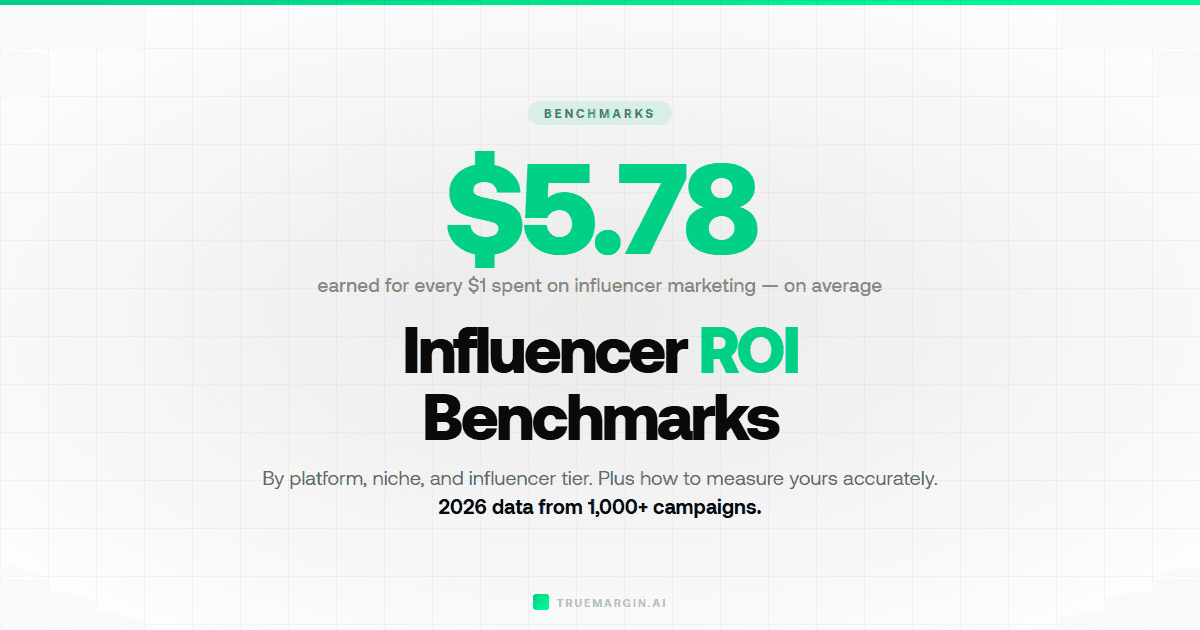
Influencer marketing typically returns $4-$6 per $1 spent. That's the general cross-industry benchmark for 2026 based on aggregated industry reports including the Influencer Marketing Hub Benchmark Report. It means a $10,000 influencer campaign can reasonably return $40,000-$60,000 in revenue.
But averages hide a massive range. Top-performing campaigns can return many times that amount. Poorly targeted campaigns return less than $2. The difference comes down to platform choice, influencer tier, and whether you're actually tracking your influencer sales correctly.
Below are the 2026 influencer marketing ROI benchmarks broken down by platform, creator tier, and campaign type — with the actual numbers you need to plan your spend.
Influencer Marketing ROI vs Traditional Digital Ads
Before we get into platform breakdowns, here's the headline comparison: influencer marketing generates 11x higher ROI than traditional digital advertising like display and banner ads. That gap is why the majority of brands now budget for influencer marketing, and most of those already running creator campaigns are maintaining or increasing their investment.
The reason is trust. An ad from a brand is an ad. A recommendation from a creator someone follows feels like advice from a friend. That trust translates directly to higher click-through rates, higher conversion rates, and higher average order values.
For ecommerce founders comparing channels, the influencer ROI formula is straightforward: (Revenue from Influencer - Cost) / Cost x 100. The hard part is attribution, not math. We cover tracking setup separately.
ROI by Platform: Where Your Dollar Goes Furthest
Not all platforms deliver the same return. Many marketers report that TikTok has the best influencer marketing ROI in 2026 — driven by lower creator costs, high organic reach, and an algorithm that doesn't gatekeep distribution behind follower counts.
| Platform | Avg ROI Range | Best For | Content Shelf Life |
|---|---|---|---|
| TikTok | $5.00 - $9.00 per $1 | Impulse products, Gen Z, visual demos | 3-7 days (organic), longer with ads |
| $4.00 - $7.00 per $1 | Lifestyle brands, 25-44 demo, Reels | 1-3 days (Stories), weeks (Reels/Feed) | |
| YouTube | $3.50 - $8.00 per $1 | Complex products, long-form reviews | Months to years |
| Twitter / X | $2.00 - $4.00 per $1 | Tech, SaaS, B2B products | Hours to 1 day |
TikTok leads on short-term ROI because creator costs are lower and organic reach is higher. A nano-influencer on TikTok charges a fraction of what the same creator charges on Instagram, and TikTok's algorithm can push a video to millions of views regardless of follower count.
YouTube is the sleeper pick. Initial ROI looks moderate, but YouTube videos keep generating views and sales for months. A single well-placed product integration can drive revenue long after you've paid the creator. Factor in that long tail when comparing platforms.
See our full breakdown of average influencer rates by platform to understand what you should be paying on each channel.
ROI by Influencer Tier
Bigger follower counts do not mean bigger returns. In fact, the data generally shows the opposite. Micro-influencers typically have 2-4x higher engagement rates than mega-influencers. That engagement gap translates directly to ROI.
| Influencer Tier | Followers | Avg Engagement Rate | Typical ROI Range |
|---|---|---|---|
| Nano | 1K - 10K | 4-8% | $6.00 - $12.00 per $1 |
| Micro | 10K - 100K | 2-5% | $5.00 - $10.00 per $1 |
| Mid-Tier | 100K - 500K | 2-3% | $4.00 - $7.00 per $1 |
| Macro | 500K - 1M | 1.5-2% | $3.00 - $5.00 per $1 |
| Mega | 1M+ | 1-2% | $2.00 - $4.00 per $1 |
Nano and micro-influencers consistently deliver the highest ROI per dollar for ecommerce brands. Their audiences are smaller but more engaged, more niche-specific, and more likely to trust a product recommendation. A micro-influencer's followers bought in for the creator's specific expertise — not just their celebrity.
Mega-influencers still have a role. If you need brand awareness at scale (a product launch, entering a new market), a single mega post reaches millions. But for direct-response ROI where every dollar needs to earn its keep, micro is the move.
Is your influencer spend actually profitable?
A $4-$6 average ROI means nothing if your margins can't support the campaign cost. Plug in your real numbers and find your breakeven point in 30 seconds.
Open ROAS Calculator →What Top-Performing Campaigns Do Differently
The $4-$6 average is just that — an average. The best campaigns significantly outperform it. Here's what separates top performers from the rest.
1. They Whitelist Creator Content as Paid Ads
Whitelisted influencer content outperforms brand-created ad creative by 20-50% when run as paid ads. Whitelisting means running the creator's post through your ad account — it shows up in feeds under the creator's name, not yours, which preserves the authenticity that made the content work organically.
The best DTC brands don't just pay influencers for organic posts. They pay for the content, test it organically, then pour ad budget behind the winners. Our guide on how to run influencer whitelisting ads covers the full setup.
2. They Stack Micro-Influencers Instead of Betting on One Macro
A $10,000 budget spent on one macro-influencer is a single bet. That same $10,000 spread across 10-20 micro-influencers at $500-$1,000 each gives you 10-20 independent shots at a winner. If two or three of those posts take off, your blended ROI beats the single-bet approach almost every time.
Volume also gives you more content to whitelist, more data on what messaging resonates, and less risk from any one creator underperforming.
3. They Track Every Dollar
The brands hitting top-tier ROI aren't guessing. They use unique promo codes per creator, UTM-tagged links, and post-purchase surveys in combination. Without proper attribution, influencer ROI is just a story you tell yourself. With it, you know exactly which creators to scale and which to cut.
If you're not tracking yet, start with our guide to tracking influencer sales.
Industry Adoption: Where the Money Is Going
Influencer marketing is no longer experimental. The numbers tell the story:
- The majority of brands now include influencer marketing in their budgets according to the 2026 Benchmark Report
- Most brands already investing are maintaining or increasing creator marketing spend
- $4-$6 typical ROI makes it one of the highest-returning marketing channels available
- Significantly higher ROI versus traditional digital advertising (display, banner, programmatic)
For ecommerce founders still on the fence: the window for cheap influencer inventory is closing. As more brands pile in, creator rates rise and the arbitrage narrows. The brands that built creator relationships early are now running paid ads with proven influencer content at scale — and their competitors are paying more for worse creative.
How to Calculate Your Influencer Marketing ROI
The formula is simple: ROI = (Revenue from Influencer - Total Cost) / Total Cost x 100.
Total cost includes the creator fee, product gifting cost, any agency fees, and ad spend if you're whitelisting. Revenue means tracked sales attributed to that creator — not estimated, not guessed, but actually measured through codes, links, or surveys.
A $2,000 influencer campaign that drives $10,000 in revenue has a 400% ROI ($5 per $1). That's in the typical range. Your goal is to beat it.
True Margin's free ROAS calculator helps you model different scenarios — plug in your product margins, influencer costs, and expected conversion rates to see if a campaign makes financial sense before you commit the budget.
Your ROI Depends on Your Margins
A $5 ROI sounds great until you realize your product margins can't support it. If you sell a $50 product with 20% margins, you make $10 per unit. You need to sell 200 units from a $2,000 influencer campaign just to break even — and that doesn't account for shipping, returns, or COGS fluctuations.
Always calculate your breakeven point before signing a creator deal. The brands with 60-70% margins can profit from almost any influencer tier. The brands with 20-30% margins need to be surgical — micro-influencers only, strict CPA targets, and whitelisting to squeeze maximum value from every piece of content.
For a deeper look at what return you actually need, see our guide on good ROAS for ecommerce. True Margin exists to help founders answer this exact question with real math instead of gut feelings.
Frequently Asked Questions
What is the average ROI for influencer marketing?
Influencer marketing typically returns $4-$6 per $1 spent as of 2026, though results vary widely. Top-performing campaigns can significantly exceed that range, while poorly targeted campaigns may return less than $2.
Which platform has the best influencer marketing ROI?
Many marketers report that TikTok delivers the best influencer marketing ROI in 2026. This is driven by lower creator costs, high engagement rates, and TikTok's algorithm that can push content to massive audiences regardless of follower count. Instagram and YouTube follow, with YouTube offering the longest content shelf life for sustained returns.
Do micro-influencers have better ROI than mega-influencers?
Yes. Micro-influencers (10K-100K followers) typically have significantly higher engagement rates than mega-influencers (1M+). Their lower rates combined with higher engagement typically produce a better cost-per-acquisition. Most DTC brands see the highest ROI from nano and micro tiers.
How does influencer marketing ROI compare to traditional digital ads?
Influencer marketing generally delivers significantly higher ROI than traditional digital advertising. The gap comes from higher trust, better engagement, and more authentic content that converts at higher rates. This is why most brands already investing in creator marketing are maintaining or increasing their budgets.
What percentage of brands invest in influencer marketing in 2026?
The majority of brands now include influencer marketing in their budgets. Among brands that already run creator campaigns, most are maintaining or increasing their investment. The channel has moved from experimental to essential for most ecommerce businesses.